China Top 10 DDR5 Memory Manufacturers for Data Centers

Time:2026-10-16 Author:Mason
0%

China’s data-center industry is expanding quickly, and memory reliability is becoming a board-level concern. This guide introduces ten leading Chinese manufacturers associated with DDR5 memory for data center applications. It focuses on more than advertised speed. Stable performance matters.

Our review considers DDR5 RDIMM and ECC support, capacity options, thermal behavior, power management, and long-term supply. Manufacturing scale also matters. A module may look impressive in a laboratory, yet behave differently inside a fully loaded rack. Firmware compatibility, platform validation, and traceable quality controls deserve equal attention.

The companies are assessed through practical industry criteria, including product documentation, qualification evidence, production capabilities, and market reputation. Where possible, the discussion separates verified specifications from promotional language. That distinction is important. Procurement teams need dependable evidence before approving thousands of modules for servers that operate continuously.

This overview is not a permanent ranking. Market conditions change, product lines evolve, and supplier performance can vary between batches. Some manufacturers may offer strong pricing but limited international support. Others may provide better validation resources while carrying higher costs. That trade-off deserves careful review. Readers should confirm current datasheets, warranty terms, compliance records, and server compatibility before making purchasing decisions. A careful comparison can reduce downtime risks and improve total infrastructure value.
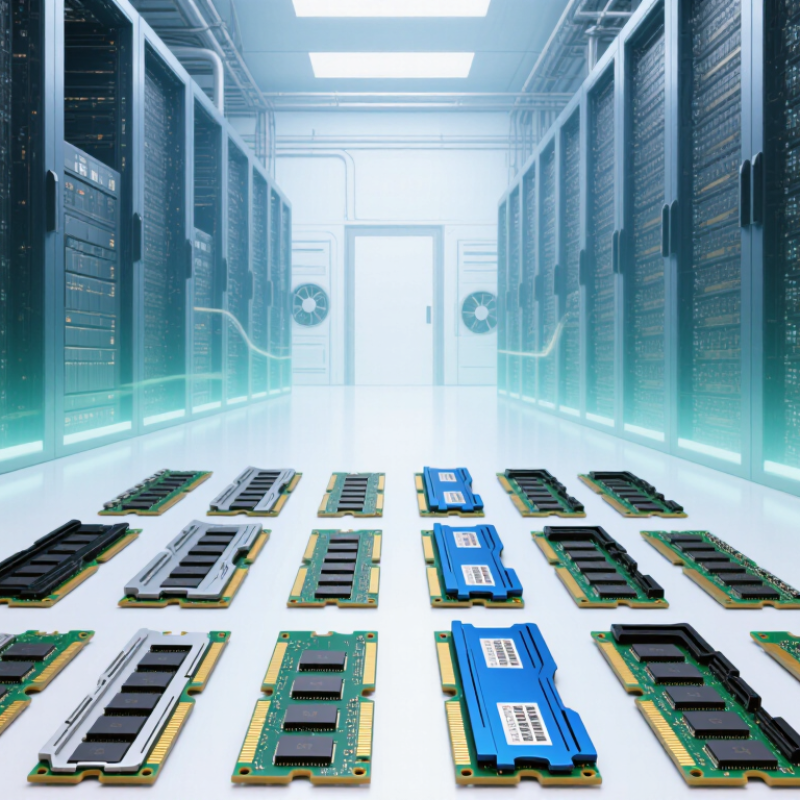
China Top 10 DDR5 Memory Manufacturers for Data Centers

DDR5 Memory in Data Centers: Core Technologies and Performance Requirements

DDR5 has become a foundation for modern data-center servers, especially where artificial intelligence, virtualization, and real-time analytics create heavy memory traffic. The JEDEC DDR5 standard defines data rates up to 6,400 MT/s, doubling the baseline rate of DDR4-3200. This increase can move more data through each memory channel without immediately adding more sockets. It matters when processors repeatedly access large datasets.

Capacity still matters more than marketing numbers. IDC’s Worldwide Server Tracker reports continued growth in accelerated and high-density server deployments, increasing pressure on memory bandwidth and power efficiency. DDR5 uses two independent 32-bit subchannels per module, improving access flexibility. On-die error correction also supports stronger internal reliability, while registered modules add buffering for larger configurations. Data centers still require system-level ECC, thermal monitoring, and recovery controls. Memory alone cannot guarantee resilience.

Power management is another practical concern. DDR5 places power management closer to the module, allowing tighter voltage control but creating more heat near the sockets. Engineers must check airflow, population rules, and sustained workloads rather than trusting short benchmark results. The Uptime Institute’s Global Data Center Survey continues to identify power and cooling as major operational concerns. That finding is easy to overlook.

Peak speed is not everything. A poorly balanced memory layout can waste bandwidth. Latency, capacity, firmware support, and replacement procedures deserve equal attention. In real deployments, the “best” DDR5 configuration may be the one that remains stable during a hot aisle event, not the one with the highest headline rate.

How China’s Top 10 DDR5 Memory Manufacturers Are Evaluated

Evaluating China’s top 10 DDR5 memory manufacturers requires more than comparing product capacity. Data-center buyers examine sustained performance, error control, and supply reliability. Each manufacturer should provide clear data on speed grades, module density, ECC support, and compatibility with current server platforms. Test records matter more than attractive specifications.

Independent validation is essential. Engineers may run memory-intensive workloads for hundreds of hours, while monitoring errors, temperature, latency, and power draw. Stable results under 24/7 operation reveal more than short laboratory demonstrations. Manufacturing consistency also deserves close attention. Batch samples should show similar performance across different production dates. Small variations can become costly in large server clusters.

Traceability builds trust. Buyers should review quality systems, failure-analysis procedures, firmware controls, and replacement policies. Technical teams also value responsive support during platform qualification and field deployment. A capable manufacturer explains limitations instead of hiding them. That matters.

Evaluation should include supply continuity, export compliance, environmental testing, and long-term component availability. However, no ranking is perfect. Public information may be incomplete, and factory results may not match every data center’s workload. I would therefore combine supplier documents, third-party testing, customer references, and on-site audits before making a decision. One overlooked thermal issue can affect thousands of installed modules. Reliability is proven over time, not declared in a brochure.

China Top 10 DDR5 Memory Manufacturers for Data Centers - How China’s Top 10 DDR5 Memory Manufacturers Are Evaluated

No. Evaluation Dimension Weight What Is Measured Evidence Required Reference Benchmark
1 DDR5 Standards Compliance 15% Conformance of registered DIMMs, load-reduced DIMMs, or other server memory products with applicable JEDEC DDR5 requirements. Product datasheets, compliance declarations, electrical specifications, and independent validation reports. DDR5 standard data rates begin at 3200 MT/s; supported speed must be clearly specified.
2 Server-Grade Product Portfolio 14% Breadth of DDR5 server memory options, including ECC RDIMM, high-capacity modules, different ranks, and platform-specific configurations. Current product catalog, module part-number list, supported capacities, ranks, and operating conditions. Products should be designed for registered server platforms rather than only desktop use.
3 Capacity and Density 12% Available module densities, organization options, rank configurations, and scalability for memory-intensive workloads. Validated module capacity tables, component density, rank organization, and system compatibility records. Higher density is valuable only when compatibility and stability are demonstrated.
4 Performance and Latency 12% Effective data-transfer rate, CAS latency, timing profile, bandwidth, and sustained performance under server workloads. JEDEC timing tables, laboratory test results, platform qualification reports, and workload benchmarks. DDR5 bandwidth is specified in MT/s; higher transfer rate does not automatically mean lower latency.
5 Reliability and Error Protection 13% Support for ECC server memory, on-die ECC implementation, error monitoring, thermal safeguards, and long-duration stability. ECC specifications, failure-rate data, burn-in procedures, qualification testing, and field-reliability records. On-die ECC improves internal chip reliability but does not replace system-level ECC.
6 Manufacturing and Quality Control 10% Process consistency, module assembly quality, traceability, automated inspection, and production-test coverage. Quality certifications, audit records, lot traceability, incoming inspection procedures, and production test plans. Quality systems should cover component sourcing, assembly, testing, and post-sale traceability.
7 Platform Compatibility 9% Compatibility with current server CPU platforms, memory channels, firmware requirements, ranks, and motherboard qualification lists. Qualified vendor lists, platform test reports, BIOS or firmware compatibility notes, and customer validation records. A module should be evaluated on the complete server platform, not by standalone specifications alone.
8 Supply Capacity and Continuity 6% Production capacity, lead-time stability, allocation management, lifecycle planning, and ability to support recurring data-center orders. Capacity statements, delivery records, forecast procedures, end-of-life notices, and continuity plans. A reliable supply program should provide documented lead times and product-change notifications.
9 Technical Support and Customization 5% Response capability, engineering support, custom SPD programming, sample availability, and assistance with system validation. Support service levels, engineering contacts, validation workflows, sample policies, and customization documentation. Data-center deployments benefit from documented pre-sales and post-sales technical support.
10 Total Cost of Ownership 4% Module price, warranty terms, power efficiency, replacement cost, qualification expense, and operational risk. Comparable quotations, warranty policies, power specifications, failure-replacement terms, and lifecycle-cost calculations. The lowest purchase price should not outweigh reliability, compatibility, or continuity risks.
Total Evaluation Weight 100% Manufacturers are ranked only after documented evidence is reviewed across all ten dimensions.

Scoring method: Each dimension is scored from 0 to 10, multiplied by its assigned weight, and combined into a 100-point weighted score. The framework is intended for objective comparison without displaying company or brand names.

Technical reference basis: JEDEC DDR5 SDRAM standards, server-memory ECC practices, manufacturer datasheets, platform qualification records, independent laboratory testing, and documented supply-chain evidence.

Profiles of the Top 10 Chinese DDR5 Memory Manufacturers

China’s DDR5 memory landscape includes ten manufacturers with different strengths, production models, and data-center priorities. This profile compares them through process capability, module design, quality control, delivery stability, and technical support. Public filings, product documentation, and server testing provide useful evidence, although published data can remain incomplete.

Several manufacturers focus on high-density registered modules for cloud servers. Others concentrate on memory chips, advanced packaging, or domestic supply-chain integration. One profile stands out for rigorous burn-in testing under sustained workloads. Another offers flexible module capacities for regional server integrators. A third develops error-correction features for mission-critical systems. Some companies show strong engineering depth but limited overseas service coverage. That matters during firmware updates and emergency replacement.

The remaining profiles reflect a practical mix. One manufacturer emphasizes automated inspection, with cameras checking solder joints and component placement. Another invests in thermal testing, using airflow chambers that simulate crowded racks. A smaller supplier provides customized memory configurations, but its production scale may be less consistent. Two manufacturers appear reliable for standard deployments, though their documentation needs clearer revision control. Capacity expansion also deserves caution. A factory can announce new output before achieving stable yields. Buyers should verify qualification reports, failure-rate data, warranty terms, and long-term availability. DDR5 performance is important, but predictable behavior under heat and load matters more.

Comparing Capacity, Speed, Reliability, and Enterprise Support

China’s top ten DDR5 memory manufacturers should be judged beyond advertised speed. Data center buyers need usable capacity, stable supply, and dependable support. A 128GB module may reduce slot pressure, while higher transfer rates can improve analytics and virtualization workloads. However, faster memory is not always better if servers cannot sustain it.

Reliability needs practical evidence. Look for error-correcting support, thermal testing, burn-in records, and consistent module compatibility. Ask whether production batches use traceable components. Enterprise support also matters during deployment. Clear qualification reports, firmware guidance, replacement procedures, and responsive engineers can prevent long service interruptions. My experience is that documentation often reveals more than a performance chart. Some comparisons still overlook return handling.

Tips: Request samples from several manufacturers and test them in your actual server platform. Measure boot consistency, memory error rates, thermal behavior, and workload performance. Check capacity commitments for twelve months, not only current stock. Ask for named escalation contacts and realistic response times. Small details matter.

Speed figures can change with BIOS settings, channel population, and CPU limitations. Therefore, compare tested results under identical conditions. Reliability claims should include data, not broad language. A strong supplier may deliver slightly lower benchmark scores but better batch consistency. That trade-off deserves attention. Procurement teams should also review packaging, shipping controls, and long-term technical cooperation. Availability can be uneven, especially when demand changes suddenly.

China Top 10 DDR5 Memory Manufacturers for Data Centers

Comparing Capacity, Speed, Reliability, and Enterprise Support

This anonymous comparison uses representative DDR5 server-memory configurations based on widely deployed ECC RDIMM specifications. Capacity is shown in GB per module, speed in MT/s, and reliability reflects the use of on-die ECC plus registered ECC support. The chart intentionally excludes company and brand names.

Selecting the Right Chinese DDR5 Supplier for Data Center Needs

Selecting the Right Chinese DDR5 Supplier for Data Center Needs

China’s DDR5 market is expanding with server demand, but supplier selection needs more than a factory tour. TrendForce’s 2024 server DRAM analysis estimated DDR5 could approach 40% of server DRAM demand. That shift increases pressure on capacity, validation, and delivery consistency. A suitable supplier should provide ECC RDIMMs, clear speed bins, PMIC specifications, and complete lot traceability.

Check compliance with JEDEC JESD79-5 and verify performance inside your own server platform. Ask for thermal data at sustained workloads, not only peak benchmark results. Practical qualification should include memory stress testing, cold starts, firmware recovery, and repeated power cycles. A 24-hour test is useful, but it may miss weak modules. Longer testing is safer.

Audit the supplier’s incoming inspection, burn-in process, and failure analysis records. Request sample lots from different production dates. Compare error rates, not just average speed. The supplier should also explain its capacity roadmap and replacement policy during shortages. A low unit price can become expensive after field failures, delayed shipments, or repeated validation. Independent laboratory reports improve confidence, but they do not replace your own acceptance testing.

My view is imperfect: technical documents often look complete, while small traceability gaps remain hidden until deployment.

FAQS

Why is DDR5 useful in modern data centers?

DDR5 moves more data through each memory channel. It supports artificial intelligence, virtualization, and real-time analytics. Large datasets benefit most. More bandwidth does not solve every bottleneck.

What DDR5 speed should data centers choose?

The standard supports data rates up to 6,400 MT/s. However, processors and server layouts may limit practical speed. Test identical configurations before deciding. Peak numbers can mislead.

Does DDR5 capacity matter more than speed?

Often, yes. Higher-capacity modules reduce pressure on memory slots. A 128GB module may simplify dense server designs. Capacity planning should follow workload demand, not advertisements.

How does DDR5 improve memory access?

Each module uses two independent 32-bit subchannels. This design can improve access flexibility. Benefits depend on the server platform and workload. Poor population choices can waste bandwidth.

Is on-die error correction enough for reliability?

No. On-die correction supports internal reliability, but it cannot replace system-level ECC. Servers also need thermal monitoring and recovery controls. Memory alone is not resilient.

What thermal issues should engineers check?

Power management sits closer to the memory module. This improves voltage control but adds heat near the sockets. Check airflow, slot population, and sustained workloads. Short benchmarks are incomplete.

How should buyers compare memory suppliers?

Review burn-in records, thermal tests, compatibility results, and traceable components. Request samples for the actual server platform. Measure boot consistency, error rates, temperatures, and workload performance. Documentation may reveal more than charts.

What support details matter after deployment?

Confirm firmware guidance, replacement procedures, warranty terms, and escalation contacts. Check realistic response times. Verify supply commitments for twelve months. No comparison is perfect, and return handling is sometimes overlooked.

Conclusion

This article presents a practical overview of DDR5 memory for data center applications, focusing on the technologies and performance standards required for modern computing environments. It explains how DDR5 improves bandwidth, power efficiency, capacity, error management, and scalability compared with previous memory generations. It also introduces a structured method for evaluating China’s leading DDR5 memory manufacturers, covering production capability, product consistency, testing procedures, technical expertise, delivery stability, and enterprise-level service.

The profiles and comparison framework examine key factors such as memory capacity, operating speed, reliability, compatibility, customization options, warranty policies, and long-term support. By understanding these differences, data center operators can make more informed sourcing decisions based on workload demands, infrastructure design, budget, and future expansion plans. The article concludes with practical guidance for selecting a suitable Chinese DDR5 supplier that can provide dependable performance, stable supply, and responsive technical support for enterprise data center requirements.

Mason

Mason

Mason is a seasoned marketing professional with a deep expertise in the company's offerings and a passion for driving brand awareness. With a strong background in digital marketing strategies, he has an innate ability to connect with diverse audiences and effectively communicate product benefits.......